

Why Your Lab Glass Keeps Cracking (and How to Stop It)
There is nothing more frustrating than spending hours on a piece of lab glassware only to have it shatter during the cooling phase. It’s gut-wrenching. Usually, it comes down to one thing: internal stress. When the temperature isn’t even, the glass pulls against itself. That tension builds up until—snap—you’ve got a pile of shards. To stop this, we use high-precision infrared (IR) elements. We keep things within a tiny 0.1°C tolerance to make sure the material stays right where it needs to be during annealing.
The Magic of 0.1°C
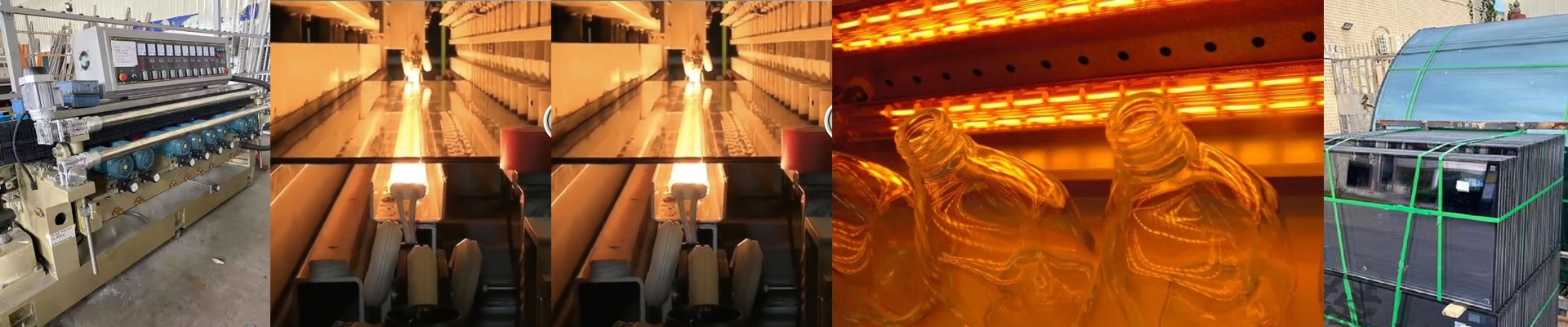
If you’re working with borosilicate or quartz, you’re walking a tightrope. The gap between “perfectly stress-relieved” and “completely ruined” is incredibly thin. If your heater swings by just a few degrees, you get hot spots. That’s a disaster. We spec our IR components to 0.1°C accuracy because we want the heat to hit the entire vessel evenly. It stops the outer skin from cooling down faster than the core, which is where those cracks start. Cheap controllers tend to “hunt” for the right temperature, swinging back and forth. We don’t do that. We pair stable IR emitters with fast PID loops so the heat just… stays put.
Distance Matters
Where you place the IR element is everything. Get too close? You’ll overheat one spot and ruin the piece. Too far? The energy drops off, and your cycle takes forever. It’s a balancing act between how much wattage your lamp is putting out and how far away it sits. You don’t want to “burn” the surface. We usually suggest a calibrated gap based on how thick your glass is. This helps the infrared waves actually soak into the material instead of just skimming the surface.
Power vs. Stability
Here’s the catch: if you want that 0.1°C stability, you can’t just slam the power on and hope for the best. You need a stepped heating profile. If you push the wattage too hard right at the start, you’ll overshoot your target. You’ll likely crack the glass before the annealing cycle even gets going. Your power supply has to be able to handle those fine-grained adjustments without flickering. It takes a bit more patience during the ramp-up, but it’s a lot better than starting over from scratch.